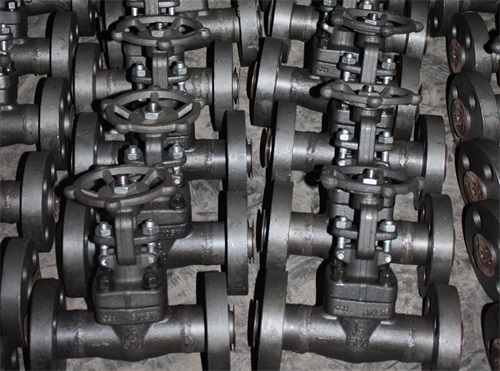
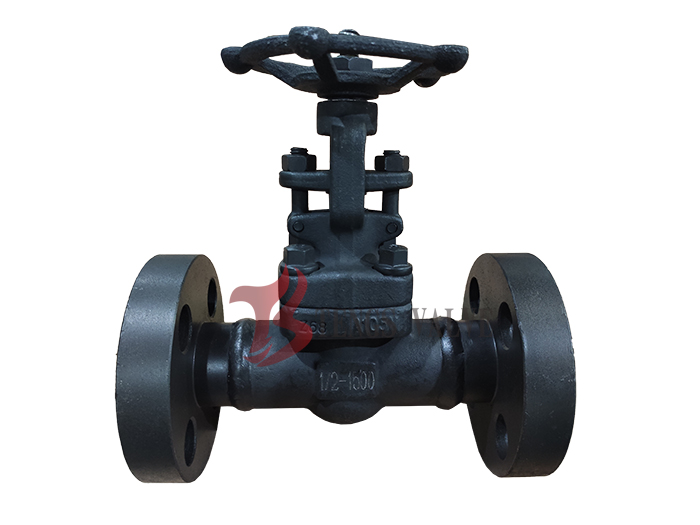
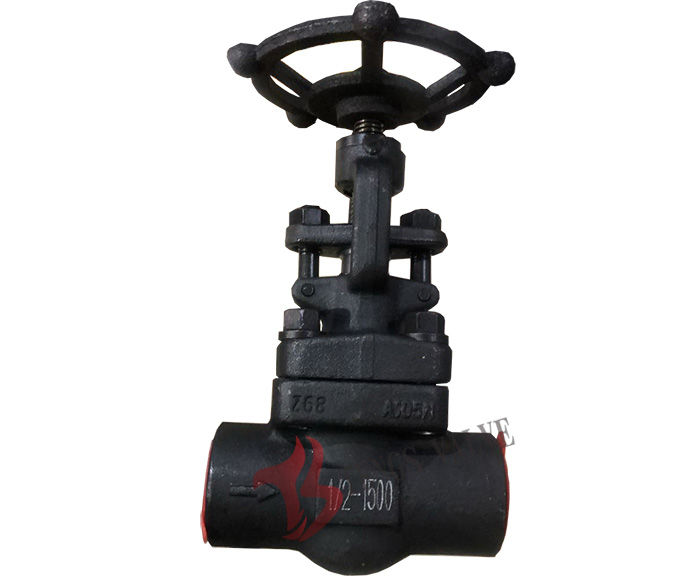
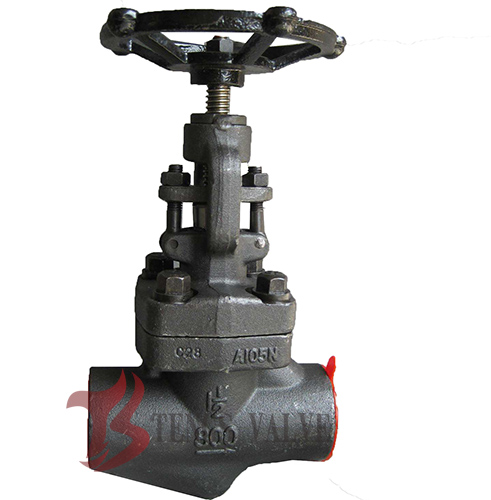
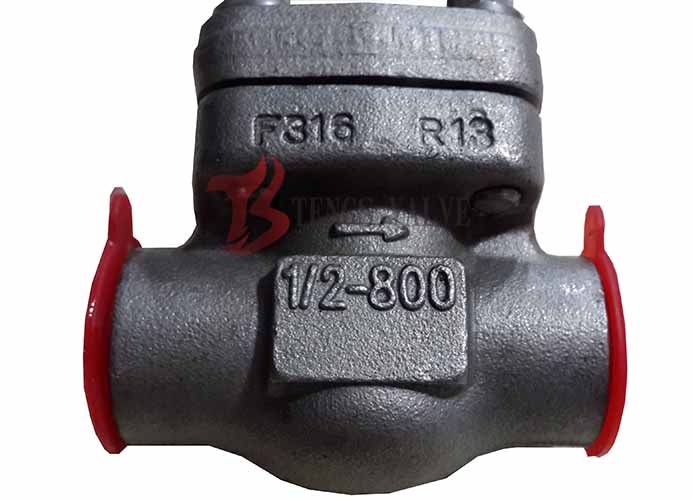
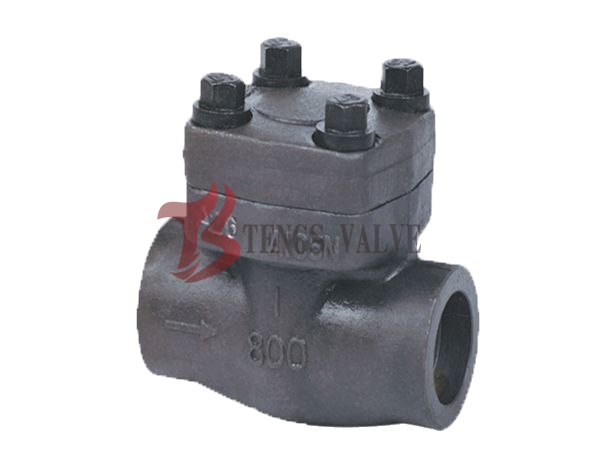
PSB Forged Check Valve 900LBS - 1500LBS - 2500LBS - SW, NPT Ends
Tengs Valve supplies high-quality Pressure Seal Bonnet (PSB) Forged Check Valves for ANSI Class 900LBS, 1500LBS and 2500LBS, manufactured to BS 5352 standards. Available with Socket Weld (SW), Threaded (NPT/Screwed) ends, sizes from NPS 1/2″ to NPS 2″ with Full Bore or Reduced Bore options. Valve types include Piston and Swing Type. Body materials include forged carbon steel (A105, LF2), alloy steel (F5, F11, F22), stainless steel (F304, F316), and duplex steel (F51). The Pressure Self-Sealing Bonnet design uses internal line pressure to tighten the seal — becoming more reliable as pressure increases, making it the standard choice for Class 900 and above critical service. Ideal for high-pressure oil & gas, petrochemical, and power generation applications.
Forged Steel Check Valve 900LBS - 1500LBS - 2500LBS (Pressure Seal Bonnet)
• Design & Manufacture: BS 5352, API 602, ASME B16.34
• Constructions: Pressure Self-Sealing Bonnet (PSB)
• Bore Type: Full Bore, Reduced Bore
• Valve Type: Piston Type, Swing Type
• Size Range: 1/2″ to 2″ (NPS 1/2 to NPS 2)
• Pressure Ratings: ANSI 900LB, 1500LB & 2500LB
• End Connections: Socket Weld (SW), Threaded (NPT/Screwed)
• Body Materials: A105, LF2, F5, F11, F22, F304, F316, F51 or Equivalent
• Trim Materials: Various trim materials are available to suit different service conditions
• Seat Type: Hard Seat (Metal Seat)
• Sour Service: NACE MR 0175 on Request
• Test and Inspection: API 598
✓ PSB + SW/NPT — the ideal combination for high-pressure small-bore instrument and sampling lines requiring compact installation and zero leakage
Pressure Seal Bonnet (PSB) vs Bolted Bonnet (BB) vs Welded Bonnet (WB)
| Parameter |
PSB |
BB |
WB |
| Sealing Principle |
Internal pressure self-energizing |
Bolts + gasket |
Seal welded to body |
| Leak Tightness |
Best at high pressure |
Good |
Excellent |
| Maintenance |
Depressurize for access |
Easy trim replacement |
Not repairable |
| Weight |
Heaviest |
Larger |
Compact |
| Recommended Class |
900–2500 |
150–900 |
600–1500 |
| Typical Application |
HP steam, wellhead, subsea |
General service |
Permanent installation |
Reference: BS 5352, API 602. PSB is the standard choice for Class 900 and above; BB and WB are preferred for lower pressure classes with SW/NPT ends.
Socket Weld (SW) vs Threaded (NPT) Ends for PSB Valves
| Parameter |
Socket Weld (SW) |
Threaded (NPT) |
| Connection Type |
Welded (socket) |
Threaded (screwed) |
| Standard |
ANSI B16.11 |
ANSI B1.20.1 |
| Leak Tightness |
Excellent (welded joint) |
Good (sealant required) |
| Pressure Limit |
Full Class 900/1500/2500 |
Reduced at high temperature |
| Installation |
Requires welding on site |
Quick installation without welding |
| PSB Compatibility |
Fully compatible with PSB |
Fully compatible with PSB |
| Typical Application |
Permanent Class 2500 HP service |
Instrument lines, sampling, temporary connections |
Reference: ANSI B16.11, ANSI B1.20.1. For Class 2500 PSB service, SW is strongly recommended over NPT due to the extreme pressure rating and the need for zero leakage.
Piston vs Swing Type PSB Forged Check Valve
| Type |
Disc Movement |
Installation |
Typical Application |
| Piston Type |
Piston moves along flow axis |
Horizontal or vertical upward flow |
HP small-bore service, fast closing, tight sealing |
| Swing Type |
Disc swings on hinge pin |
Horizontal (recommended) |
Lower pressure drop, NPS 1.5 to 2 sizes |
Reference: BS 5352, API 602. Piston type is the most common for Class 900/1500/2500 PSB valves with SW/NPT ends; Swing type is available for Class 900/1500 in larger sizes (NPS 1.5 to 2).
PSB Forged Check Valve 900LBS - 2500LBS Material List
| Part Name |
Carbon Steel |
Alloy Steel |
Stainless Steel |
| A105 |
A105 |
A105 |
LF2 |
F5 |
F11 |
F22 |
F304 |
F316 |
F51 |
| Trim 1# |
Trim 8# |
Trim 5# |
Trim 13Cr |
Trim 13Cr |
Trim 13Cr |
Trim 13Cr |
— |
— |
— |
| Body |
A105 |
A105 |
A105 |
LF2 |
F5 |
F11 |
F22 |
F304 |
F316 |
F51 |
| Bonnet (PSB) |
A105 |
A105 |
A105 |
LF2 |
F5 |
F11 |
F22 |
F304 |
F316 |
F51 |
| Disc |
13Cr |
13Cr |
STL |
13Cr |
13Cr |
13Cr |
13Cr |
F304 |
F316 |
F51 |
| Seat |
13Cr |
STL |
STL |
13Cr |
13Cr |
13Cr |
13Cr |
SS304 |
SS316 |
STL |
| Hinge Pin |
F6a |
F6a |
F6a |
F6a |
F6a |
F6a |
F6a |
F304 |
F316 |
F51 |
| Seal Ring |
Soft Iron |
Soft Iron |
Soft Iron |
Soft Iron |
Soft Iron |
Soft Iron |
Soft Iron |
SS304 |
SS316 |
SS316 |
Reference: BS 5352, API 602, ASTM A105, A350, A182. Materials may vary by model and pressure rating. Contact us for confirmed material certificate.
PSB Forged Check Valve 900LBS - 1500LBS Dimensions (SW, NPT Ends)
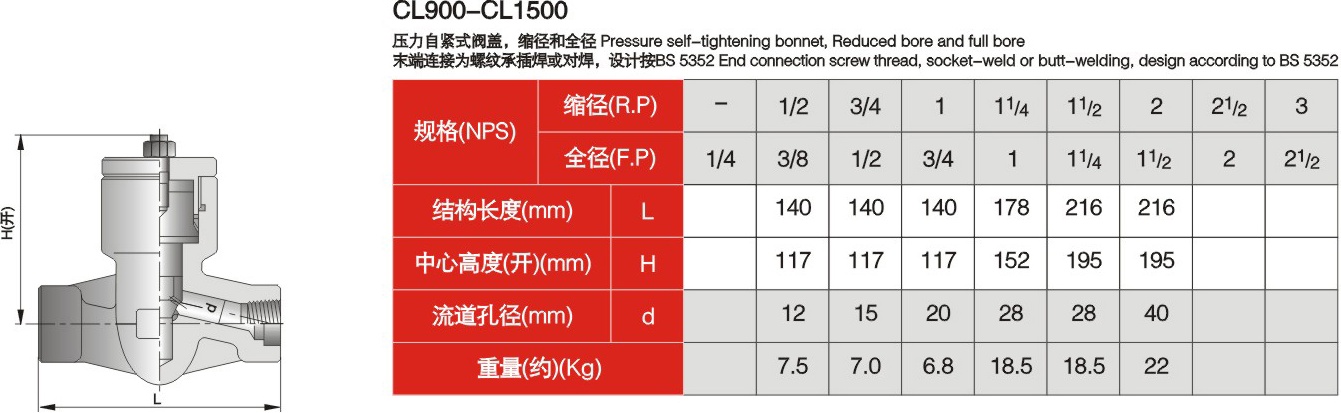
Reference: BS 5352, ASME B16.11, ANSI B1.20.1. Dimensions may vary by manufacturer. Contact us for confirmed drawing and quotation.
PSB Forged Check Valve 2500LBS Dimensions (SW, NPT Ends)
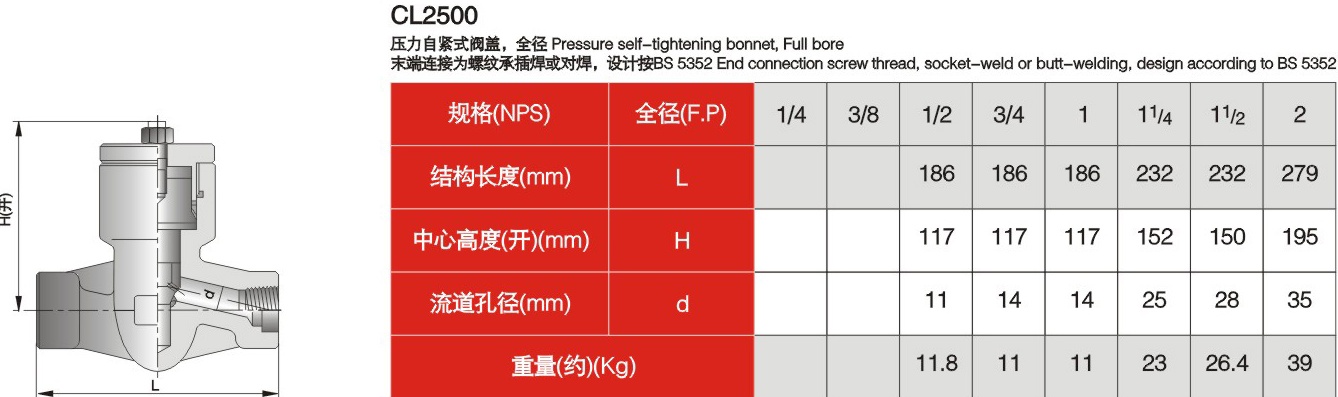
Reference: BS 5352, ASME B16.11, ANSI B1.20.1. Dimensions may vary by manufacturer. Contact us for confirmed drawing and quotation.
PSB Forged Check Valve 900 - 2500 Applications
• Oil and Gas Industry: High-pressure wellhead equipment, Christmas trees, manifold and flowline backflow protection.
• Power Generation: Main steam isolation, boiler drains, turbine bypass lines at Class 900 to 2500.
• Petrochemical: Hydrocracking, hydrotreating, catalytic cracking, reformer units.
• Subsea and Offshore: Subsea manifolds, HIPPS systems, high-pressure process lines.
• Gas Injection and Compression: Natural gas compressor lines, gas injection wells.
• Instrumentation: High-pressure instrument root valves, sensing line isolation.
FAQ - PSB Forged Check Valve 900LBS - 1500LBS - 2500LBS
Q1: What is a Pressure Self-Sealing Bonnet (PSB) and why is it used for Class 900+?
A: Pressure Seal Bonnet uses internal line pressure to self-energize the seal between the bonnet and body. A soft iron or stainless steel seal ring sits between the bonnet and body; as line pressure increases, it pushes the bonnet against the seal ring, tightening the seal. This self-energizing principle makes PSB more reliable than bolted bonnet at very high pressure, and it eliminates the need for massive bolting and heavy flanges. For Class 900 and above, PSB is the standard choice. At Class 2500 (430 bar / 6,250 psi), PSB is essentially the only practical bonnet design.
Q2: Why combine PSB with SW/NPT ends instead of flanged ends?
A: PSB is used for high-pressure service, and SW/NPT ends are used for small-bore (NPS 1/2 to NPS 2) compact installations. Combining PSB with SW/NPT creates an ultra-compact, high-pressure, zero-leakage valve that is ideal for instrument lines, sampling systems, and subsea manifolds where space is limited and leak tightness is critical. Flanged ends would add significant weight and require more space. PSB + SW/NPT is the most compact solution for Class 900 to 2500 small-bore high-pressure service.
Q3: What is the difference between Class 900, 1500 and 2500 PSB valves?
A: Class 900 PSB (153 bar / 2,220 psi) is suitable for high-pressure steam and gas transmission. Class 1500 PSB (260 bar / 3,750 psi) is designed for wellhead, gas injection, and high-pressure process service. Class 2500 PSB (430 bar / 6,250 psi) handles HP steam generators, gas compressor lines, and subsea HIPPS systems. Higher classes have thicker wall sections, heavier body and bonnet, and higher weight. For Class 2500, only SW ends (or BW with flanged connection) are recommended; NPT may not maintain full pressure rating at high temperature.
Q4: Can PSB valves be repaired or maintained?
A: PSB design requires depressurization before bonnet access. Once depressurized, the bonnet can be removed by releasing the seal ring, and the internal trim (disc, seat, hinge pin) can be inspected or replaced. Because PSB relies on line pressure for sealing, it does not require periodic bolt torque checks like BB designs. However, bonnet removal is more involved than BB. For critical service, we recommend stocking spare seal rings and trim parts. For Class 2500 subsea service, valves are typically replaced rather than repaired in situ.
Q5: What is the difference between SW and NPT ends for PSB valves?
A: SW (Socket Weld) ends are welded to the pipe, providing excellent leak tightness and full Class 900/1500/2500 pressure capability. NPT (Threaded) ends are screwed onto the pipe, allowing quick assembly and disassembly without welding — preferred for instrument lines and sampling systems. For Class 2500 PSB valves, SW is strongly recommended because NPT may have a reduced pressure rating at high temperature. Both SW and NPT are fully compatible with the PSB design. For critical subsea or wellhead service, SW is preferred.
Q6: What is the difference between Piston and Swing type PSB valves?
A: Piston type uses a piston that moves along the flow axis, providing fast closing and tight sealing — the most common type for Class 900/1500/2500 PSB valves with SW/NPT ends. Swing type uses a hinged disc that swings on a hinge pin, providing lower pressure drop — suitable for NPS 1.5 to 2 sizes in Class 900/1500. For Class 2500, only Piston type is recommended due to the extreme pressure rating. For small-bore (NPS 1/2 to NPS 1), Piston type is generally preferred; for NPS 1.5 to 2 with lower pressure drop requirements, Swing type can be considered.
Request a Quote for PSB Forged Check Valve 900 - 2500LBS
Contact us for pricing, technical datasheets, or customized solutions. Our engineering team responds within 24 hours.
Email Us Now
Forged Steel Check Valve Dimension Details
Related Valve Pages