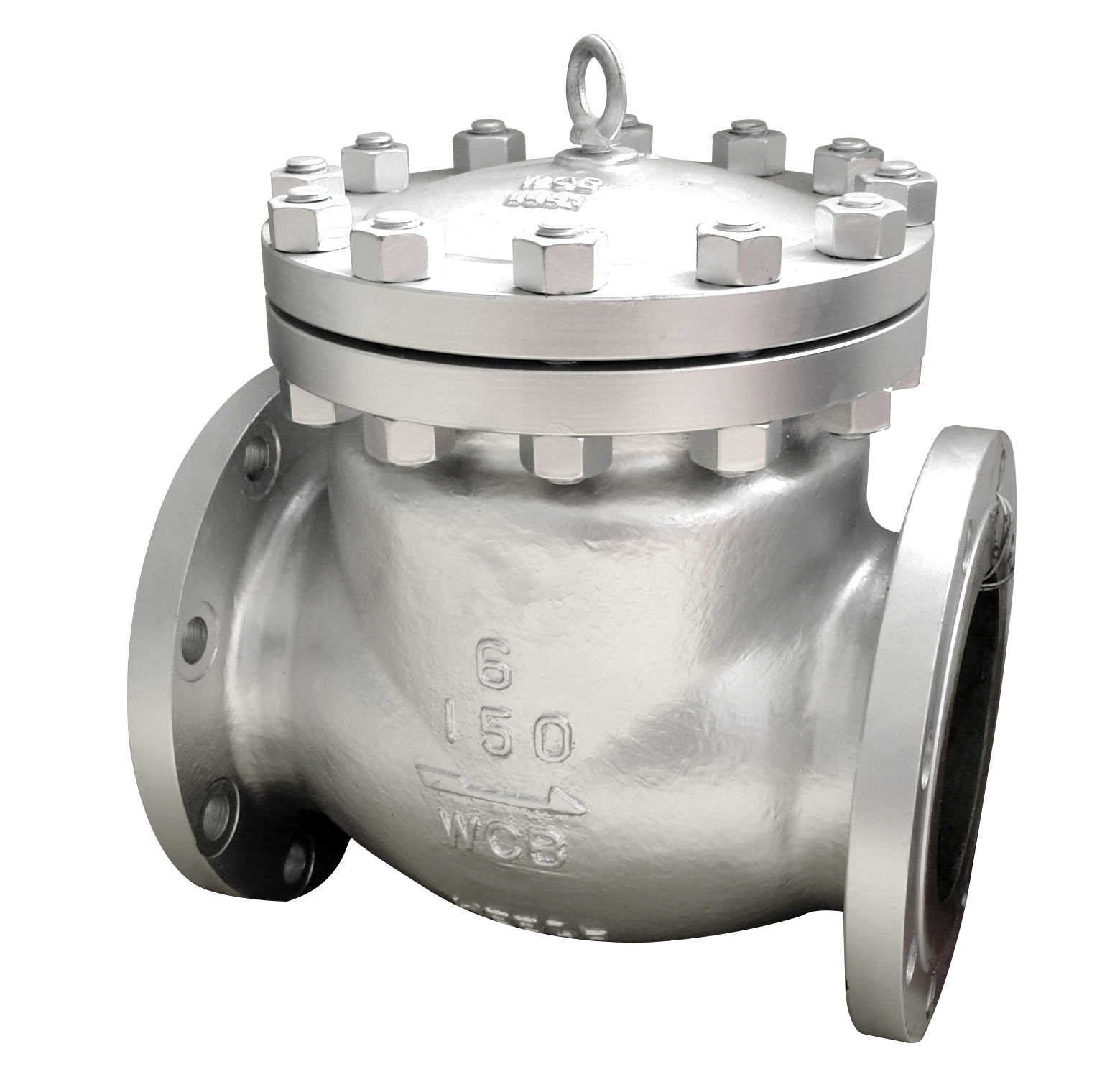


Industrial Check Valve - API 594, BS 1868, 2" to 36"
Tengs Valve supplies high-quality Industrial Check Valves (Non-Return Valves) in cast carbon steel and stainless steel, manufactured to API 594, BS 1868, and API 6D standards. Available in swing type, lifting (vertical) type, and piston type configurations. Sizes range from 2″ to 36″ (DN50 to DN900) with pressure ratings from ANSI Class 150Lbs to 2500Lbs. Features include bolted bonnet or pressure self-sealing bonnet with lifting lug, and flanged or butt weld ends. Trim options include No.1, 5, 8, 10, and 12. Ideal for oil & gas, chemical, power generation, and water treatment pipeline systems.
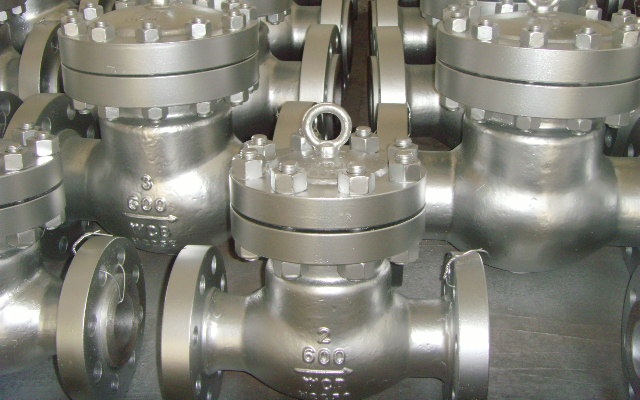
Industrial Check Valve Standards
• Design and Manufacture: BS 1868, API 594, API 6D
• Inspection and Test: API 598, API 6D
• End Flange Dimension: ASME B16.5
• BW Ends Dimension: ASME B16.25
• Face to Face / End to End: ASME B16.10, API 6D
• Pressure-Temperature Rating: ASME B16.34
✓ API 594 covers Type A (short face-to-face, wafer / lug / dual-plate) and Type B (bolted-cover swing, long face-to-face) check valves
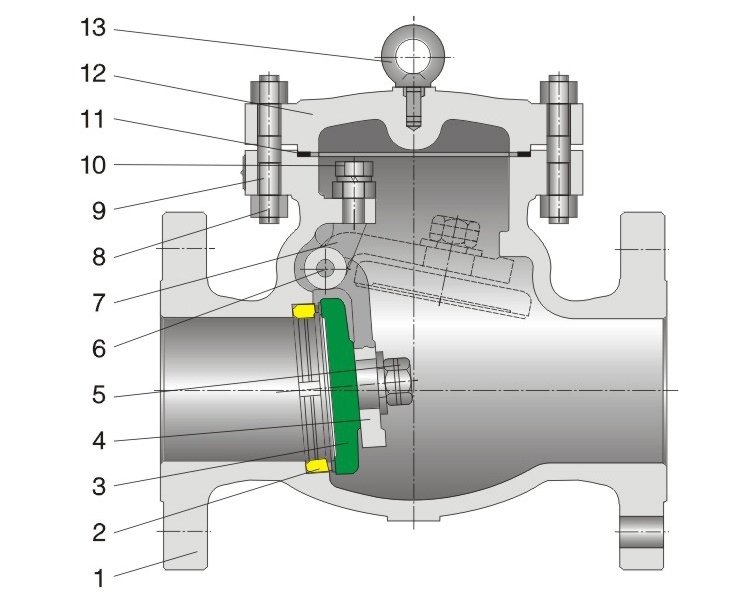
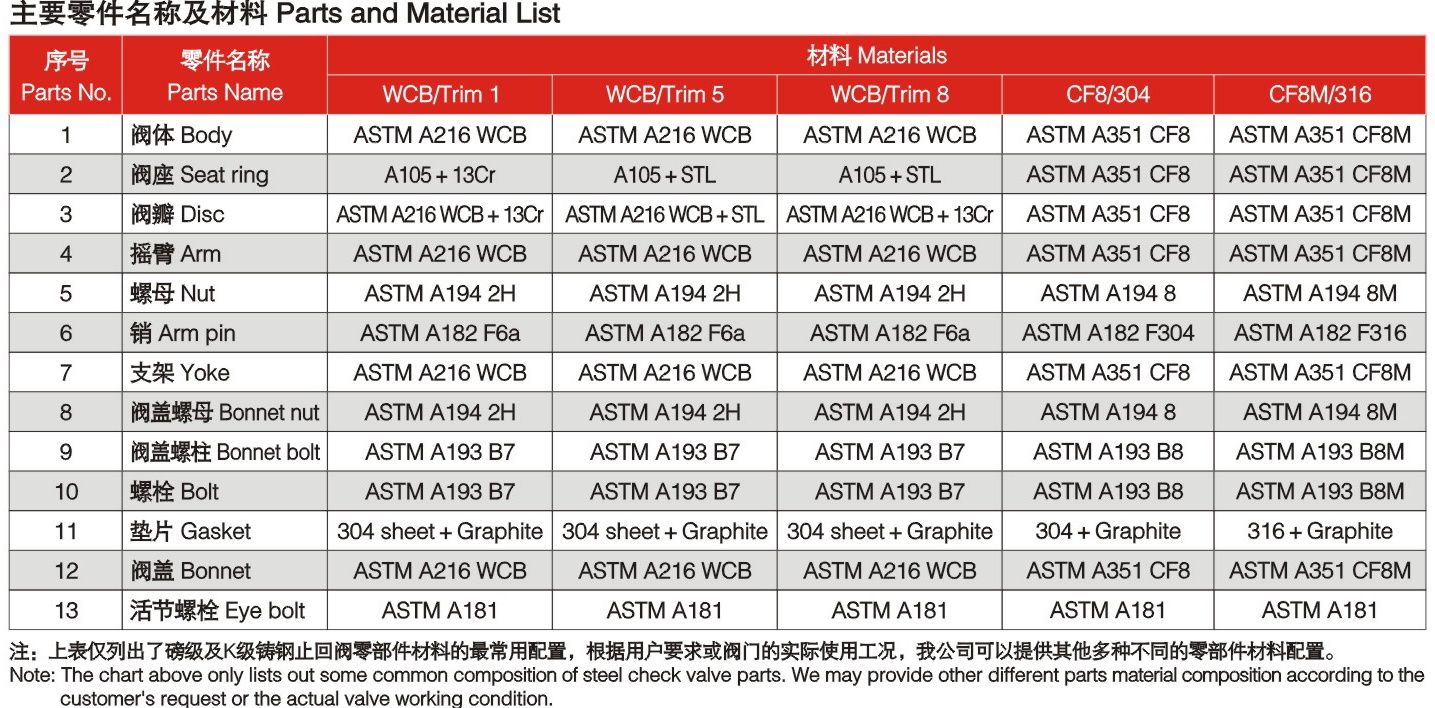
Industrial Check Valve Materials List
| Part Name | Material | ||||
|---|---|---|---|---|---|
| Carbon Steel (WCB) | Stainless Steel (CF8 / CF8M) | Stainless Steel (CF3 / CF3M) | Alloy Steel (WC6 / WC9) | Duplex (4A / 5A) | |
| Body | A216 WCB | A351 CF8 / CF8M | A351 CF3 / CF3M | A217 WC6 / WC9 | A890 4A / 5A |
| Bonnet | A216 WCB | A351 CF8 / CF8M | A351 CF3 / CF3M | A217 WC6 / WC9 | A890 4A / 5A |
| Disc | WCB + 13Cr / STL | CF8 / CF8M | CF3 / CF3M | WC6 / WC9 + 13Cr / STL | 4A / 5A + STL |
| Seat | 13Cr / STL | SS304 / SS316 | SS304L / SS316L | 13Cr / STL | STL |
| Stem / Hinge Pin | A182 F6a | A182 F304 / F316 | A182 F304L / F316L | A182 F6a / F11 | A182 F51 / F53 |
| Bolts / Nuts | A193 B7 / A194 2H | A193 B8 / A194 8, B8M / 8M | A193 B8 / A194 8, B8M / 8M | A193 B7 / A194 2H | A193 B8M / A194 8M |
| Gasket | Graphite / PTFE | Graphite / PTFE | Graphite / PTFE | Graphite / PTFE | Graphite / PTFE |
Reference: API 594, BS 1868, API 6D. Materials may vary by model and pressure rating. Contact us for confirmed material certificate.
Typical Applications of Industrial Check Valve
• Oil & gas transmission: crude oil, natural gas, and refined product pipelines requiring reliable backflow protection.
• Refinery and petrochemical: process lines where reverse flow must be prevented to protect pumps and compressors.
• Power generation: main steam, boiler feedwater, and cooling water systems at all pressure classes.
• Chemical plants: corrosive media handling with CF8 / CF8M / CF3 / CF3M and duplex options.
• Water treatment: pump discharge lines, water distribution, and wastewater systems.
• Offshore and marine: duplex stainless steel 4A / 5A resists chloride stress corrosion cracking in seawater environments.
FAQ - Industrial Check Valve
Q1: What is an industrial check valve?
A: An industrial check valve, also known as a non-return valve, is an automatic valve that allows fluid to flow in one direction only. When forward flow enters, the disc opens; when flow stops or reverses, the disc closes automatically to prevent backflow. It is manufactured to API 594, BS 1868, and API 6D standards, and available in swing, lift, and piston type configurations.
Q2: What is the difference between a swing check valve and a lift check valve?
A: A swing check valve uses a hinged disc that swings on a hinge pin, providing full bore flow with minimal pressure drop and low flow resistance — suitable for larger sizes and horizontal pipelines. A lift check valve uses a piston or lifting disc that moves along the flow axis, providing faster closing and better sealing at the seat — suitable for smaller sizes and vertical pipelines. Lift check valves generally provide tighter shut-off but higher pressure drop.
Q3: What is the difference between API 594 and API 6D?
A: API 594 covers the design, materials, face-to-face dimensions, and testing of check valves, including Type A (short face-to-face wafer / lug / dual-plate) and Type B (bolted-cover swing, long face-to-face). API 6D is a broader pipeline valve standard that covers gate, ball, plug, and check valves, with more stringent testing requirements including shell test, low-pressure closure test, and high-pressure closure test.
Q4: What are the common trim materials for check valves?
A: Common trim materials follow API 600 numbering: Trim 1 (13Cr / 410 SS) for standard non-corrosive service; Trim 5 (Stellite hard-faced) for high-temperature steam and erosion; Trim 8 (13Cr + Stellite) for general sour service; Trim 10 (316SS with Stellite seat) for corrosion and erosion combination; and Trim 12 (13Cr + Stellite, NACE MR0175 compliant) for sour gas service containing H2S.
Q5: Can check valves be installed in vertical pipelines?
A: Swing check valves can be installed in horizontal and vertical upward flow pipelines. When installed in vertical lines, the flow must be in an upward direction. Lift check valves are generally installed in horizontal pipelines, but some designs allow vertical installation with upward flow. Please confirm installation orientation when requesting a quotation.
Q6: What is the difference between a bolted bonnet and a pressure seal bonnet check valve?
A: Bolted bonnet is suitable for general service up to Class 900 and is easy to maintain. Pressure seal bonnet (PSB) uses internal line pressure to tighten the seal, making it more suitable for very high pressure and high temperature applications (Class 900 and above). Both options are available depending on the pressure class and service conditions.
Get a Fast Quote for Industrial Check Valve
Send us your size, pressure rating, type (swing / lift / piston), material, end connection, and quantity. Our team will reply within 24 hours with price, drawing, and delivery time.
Email: sales@tengsvalve.com
Website: Request a Quote Online
Email Us Now
Industrial Check Valve Dimension Details
Related Valve Pages
• Industrial Gate Valve - Cast Steel Gate Valve Series
• Globe Valve - Cast Steel Globe Valve Series
• Ball Valve - Ball Valve Series Overview
• Butterfly Valve - Butterfly Valve Series Overview
• Industrial Strainer Series - Y, Basket, T Type Strainers