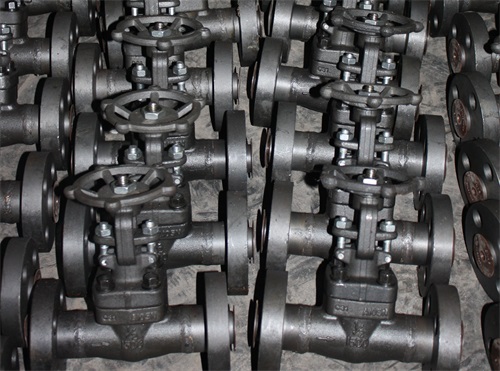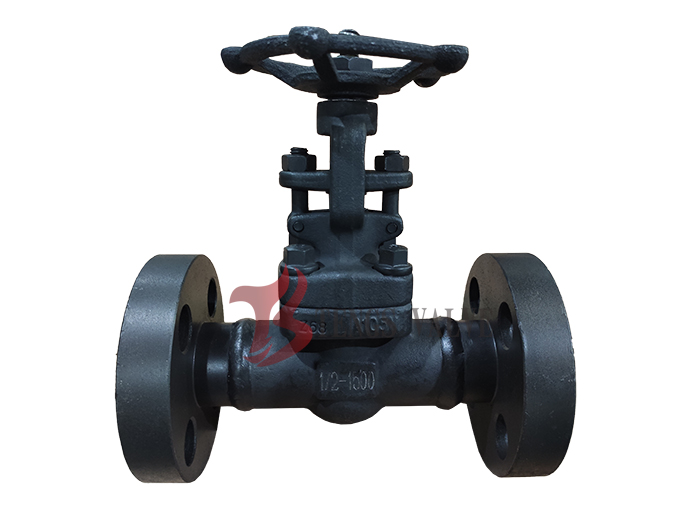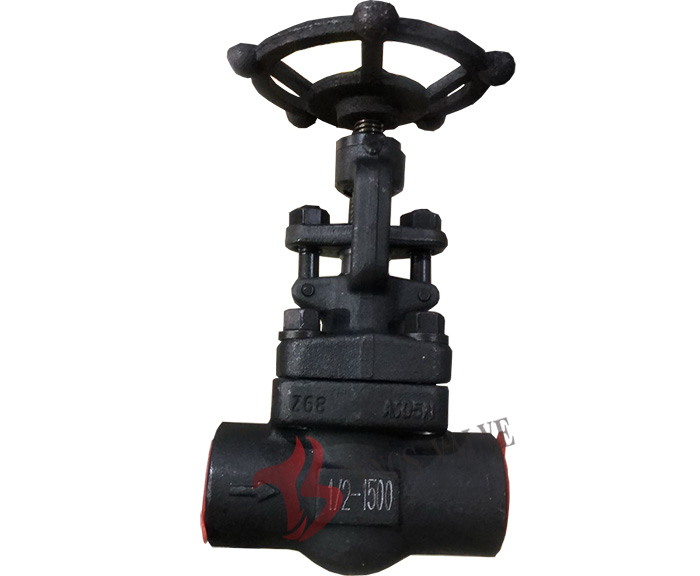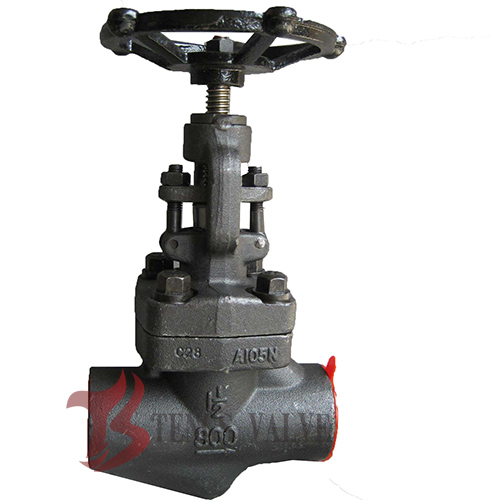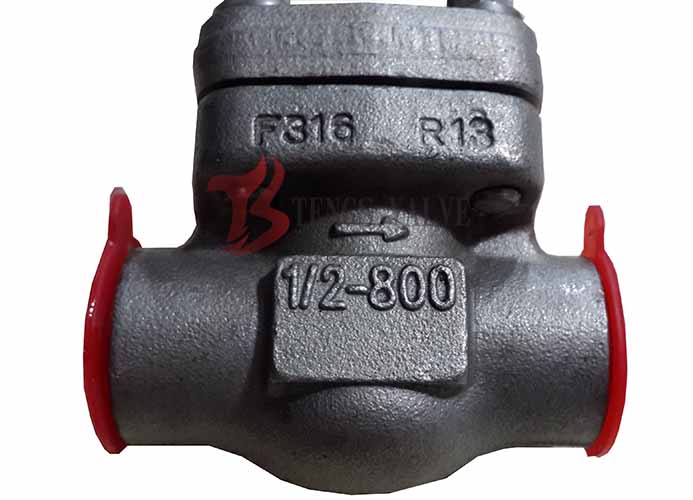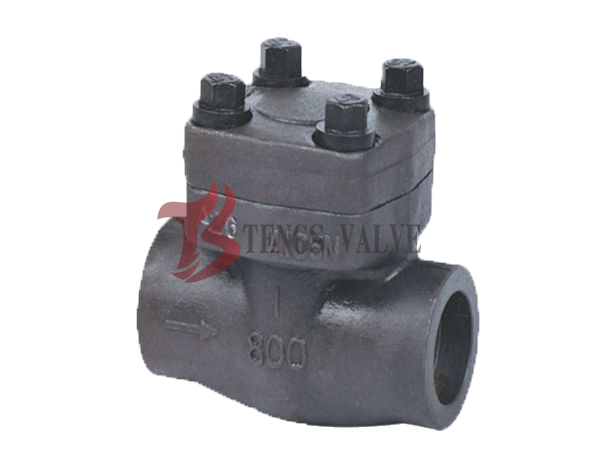


Forged Check Valve 150LB - 300LB - 600LB - RF, RTJ, BW Ends
Tengs Valve supplies high-quality Forged Check Valves for ANSI Class 150Lbs, 300Lbs and 600Lbs, manufactured to BS 5352 standards. Available with integral flange, welded flange, RF, RTJ, and BW ends. These bolted bonnet forged steel check valves feature Full Bore (Full Port) design with piston, lifting, and swing type disc. Body materials include carbon steel (A105, LF2), alloy steel (F5, F11, F22), and stainless steel (F304, F316, F51, F53). Ideal for oil & gas, petrochemical, power generation, and industrial pipeline applications requiring reliable backflow protection in small-bore high-pressure service.
Forged Check Valve 150LB - 300LB - 600LB Specifications (RF, RTJ, BW Ends)
• Design & Manufacture: BS 5352, API 602, ASME B16.34
• Constructions: Bolted Bonnet (B.B.)
• Bore Type: Full Bore / Full Port
• Valve Type: Piston Type, Lifting Type, Swing Type
• Size Range: 1/2″ to 2″ (DN15 to DN50)
• Pressure Ratings: ANSI 150LBS, 300LBS, 600LBS
• End Connections: Flanged (RF, RTJ), Butt Weld (BW)
• Body Materials: A105, LF2, F5, F11, F22, F304, F316, F51, F53 or Equivalent
• Trim Materials: 13Cr, Half Stellite, Full Stellite, and other materials to suit service conditions
• Sour Service: NACE MR 0175
• Test and Inspection: API 598
✓ Full Port design provides minimal pressure drop and allows pigging operations in pipeline service
Class 150 vs Class 300 vs Class 600 Forged Check Valve
| Parameter | Class 150 | Class 300 | Class 600 |
|---|---|---|---|
| Design Pressure (bar) | 19.6 | 51 | 102 |
| Design Pressure (psi) | 285 | 740 | 1,480 |
| Wall Thickness | Standard | Thicker | Heaviest |
| Typical Application | Low-pressure water, oil, gas, utility lines | General hydrocarbon, steam, process piping | High-pressure process, refinery, power plant |
Reference: ASME B16.34. Design pressure values are for reference only and vary with material and temperature.
RF vs RTJ vs BW: End Connection Comparison
| End Type | Sealing Method | Pressure Range | Typical Application |
|---|---|---|---|
| RF (Raised Face) | Gasket compression on raised face | Class 150 to 600 | General low to medium pressure service |
| RTJ (Ring Type Joint) | Metal ring gasket in grooved flange | Class 600 and above | High-pressure and high-temperature critical service |
| BW (Butt Weld) | Permanent welded joint | All pressure classes | Permanent installation, leak-tight high-pressure service |
Reference: ASME B16.5, ASME B16.25. RF and RTJ are flanged connections; BW is a welded connection.
Forged Check Valve 150LB - 600LB Material List
| Part Name | Carbon Steel | Alloy Steel | Stainless Steel | ||||||||
|---|---|---|---|---|---|---|---|---|---|---|---|
| A105 | A105 | A105 | LF2 | F5 | F11 | F22 | F304 | F316 | F51 | F53 | |
| Trim 1# | Trim 8# | Trim 5# | Trim 13Cr | Trim 13Cr | Trim 13Cr | Trim 13Cr | — | — | — | — | |
| Body | A105 | A105 | A105 | LF2 | F5 | F11 | F22 | F304 | F316 | F51 | F53 |
| Bonnet | A105 | A105 | A105 | LF2 | F5 | F11 | F22 | F304 | F316 | F51 | F53 |
| Disc | 13Cr | 13Cr | STL | 13Cr | 13Cr | 13Cr | 13Cr | F304 | F316 | F51 | F53 |
| Seat | 13Cr | STL | STL | 13Cr | 13Cr | 13Cr | 13Cr | SS304 | SS316 | STL | STL |
| Hinge Pin | F6a | F6a | F6a | F6a | F6a | F6a | F6a | F304 | F316 | F51 | F53 |
| Bolts / Nuts | B7 / 2H | B7 / 2H | B7 / 2H | L7 / 4 | B16 / 4 | B16 / 4 | B16 / 4 | B8 / 8 | B8M / 8M | B8M / 8M | B8M / 8M |
| Gasket | Graphite | Graphite | Graphite | Graphite | Graphite | Graphite | Graphite | Graphite | Graphite | Graphite | Graphite |
Reference: BS 5352, API 602, ASTM A105, A350, A182. Materials may vary by model and pressure rating. Contact us for confirmed material certificate.
Class 150 - 300 - 600LBS Bolted Bonnet Full Port (RF, BW Ends)

| Size (NPS) | Dimension | 1/2 | 3/4 | 1 | 1 1/4 | 1 1/2 | 2 |
|---|---|---|---|---|---|---|---|
| Face to Face (mm) | CL150 L(RF) / L1(BW) | 108 | 118 | 127 | 140 | 165 | 203 |
| CL300 L(RF) / L1(BW) | 153 | 178 | 203 | 216 | 229 | 267 | |
| CL600 L(RF) / L1(BW) | 165 | 191 | 216 | 229 | 241 | 292 | |
| Height (mm) | CL150 H | 77 | 81 | 93 | 95 | 103 | 118 |
| CL300/600 H | 61 | 78 | 84 | 101 | 120 | 133 | |
| Flow Port (mm) | d | 10 | 13 | 17.5 | 23 | 30 | 35 |
| Weight (kgs) | CL150 (RF) | 3.6 | 4.6 | 8.5 | 9.2 | 12.5 | 14.8 |
| CL150 (BW) | 3.0 | 3.6 | 7.6 | 8.5 | 11.3 | 13.6 | |
| CL300 (RF) | 3.7 | 4.8 | 8.8 | 9.6 | 13.7 | 17.8 | |
| CL300 (BW) | 3.2 | 4.3 | 8.0 | 8.6 | 12.7 | 16.2 | |
| CL600 (RF) | 4.0 | 5.8 | 9.5 | 10.4 | 15.6 | 24.5 | |
| CL600 (BW) | 3.4 | 5.1 | 8.8 | 9.2 | 14.8 | 22.5 |
Reference: BS 5352, ASME B16.10. Dimensions may vary by manufacturer. Contact us for confirmed drawing and quotation.
Forged Check Valve 150LB - 600LB Applications
• Oil and Gas Industry: Wellhead equipment, manifold and flowline backflow protection.
• Power Generation: Steam isolation, boiler drains, turbine bypass lines.
• Petrochemical: Hydrocarbon processing, catalytic cracking, reformer units.
• Chemical Processing: Corrosive fluid backflow prevention, reagent feed lines.
• Water Treatment: Pump discharge, desalination, boiler feed water.
• Instrumentation: Instrument root valves, sensing line isolation.
FAQ - Forged Check Valve 150LB - 300LB - 600LB
Q1: What is the difference between Class 150, 300 and 600 forged check valves?
A: Class 150 (19.6 bar / 285 psi) is suitable for low-pressure water, oil, gas, and utility lines. Class 300 (51 bar / 740 psi) is designed for general hydrocarbon, steam, and process piping. Class 600 (102 bar / 1,480 psi) handles high-pressure process, refinery, and power plant service. Higher classes have thicker wall sections, heavier flanges, and higher pressure/temperature ratings.
Q2: When should I use RF, RTJ, or BW ends?
A: RF (Raised Face) is the most common flange facing for Class 150 to 600 general service. RTJ (Ring Type Joint) uses a metal ring gasket and is preferred for Class 600 and above in high-pressure critical service. BW (Butt Weld) provides a permanent welded joint and is suitable for all pressure classes where a leak-tight permanent installation is required.
Q3: What is the difference between integral flange and welded flange?
A: Integral flange is forged as one piece with the valve body, providing higher structural integrity and better suitability for high-pressure small-bore service. Welded flange is forged separately and then welded to the valve body, which is more economical for larger sizes and lower pressure classes. Both flange types can be supplied with RF or RTJ facing per ASME B16.5.
Q4: Why does face-to-face length change with pressure class?
A: Face-to-face (end-to-end) dimensions are governed by ASME B16.10 and increase with higher pressure classes. For example, a 1/2 inch forged check valve has L (RF) of 108 mm in Class 150, 153 mm in Class 300, and 165 mm in Class 600. Higher pressure classes require thicker walls, larger flanges, and longer overall length. This must be considered during piping layout and installation.
Q5: Why is BW end lighter than RF end?
A: BW (Butt Weld) ends do not require flanges, which are the heaviest part of a flanged valve. For example, a 2 inch Class 600 forged check valve weighs 24.5 kg with RF ends but only 22.5 kg with BW ends. BW is also preferred for permanent installations where leak-tightness and weight savings are important. RF is preferred where maintenance and replacement are needed.
Q6: How to select the correct flow port dimension "d"?
A: The flow port dimension "d" represents the internal bore diameter of the valve. For forged check valves 1/2 inch to 2 inch, the standard full-port bore ranges from 10 mm (1/2 inch) to 35 mm (2 inch). Full port provides minimal pressure drop and allows pigging operations. If a reduced port is acceptable, a smaller "d" can be specified for cost savings, but this will increase flow velocity and pressure drop.
Request a Quote for Forged Check Valve 150LB - 600LB
Contact us for pricing, technical datasheets, or customized solutions. Our engineering team responds within 24 hours.
Email: sales@tengsvalve.com
Website: Request a Quote Online
Email Us Now
Forged Steel Check Valve Dimension Details
Related Valve Pages
• Forged Steel Check Valve - API 602 Forged Steel Check Valve Main Page
• Forged Steel Gate Valve - API 602 Forged Steel Gate Valve
• Forged Steel Globe Valve - API 602 Forged Steel Globe Valve
• Industrial Check Valve - Cast Steel Check Valve Main Page
• Industrial Gate Valve - API 600 Cast Steel Gate Valve Series