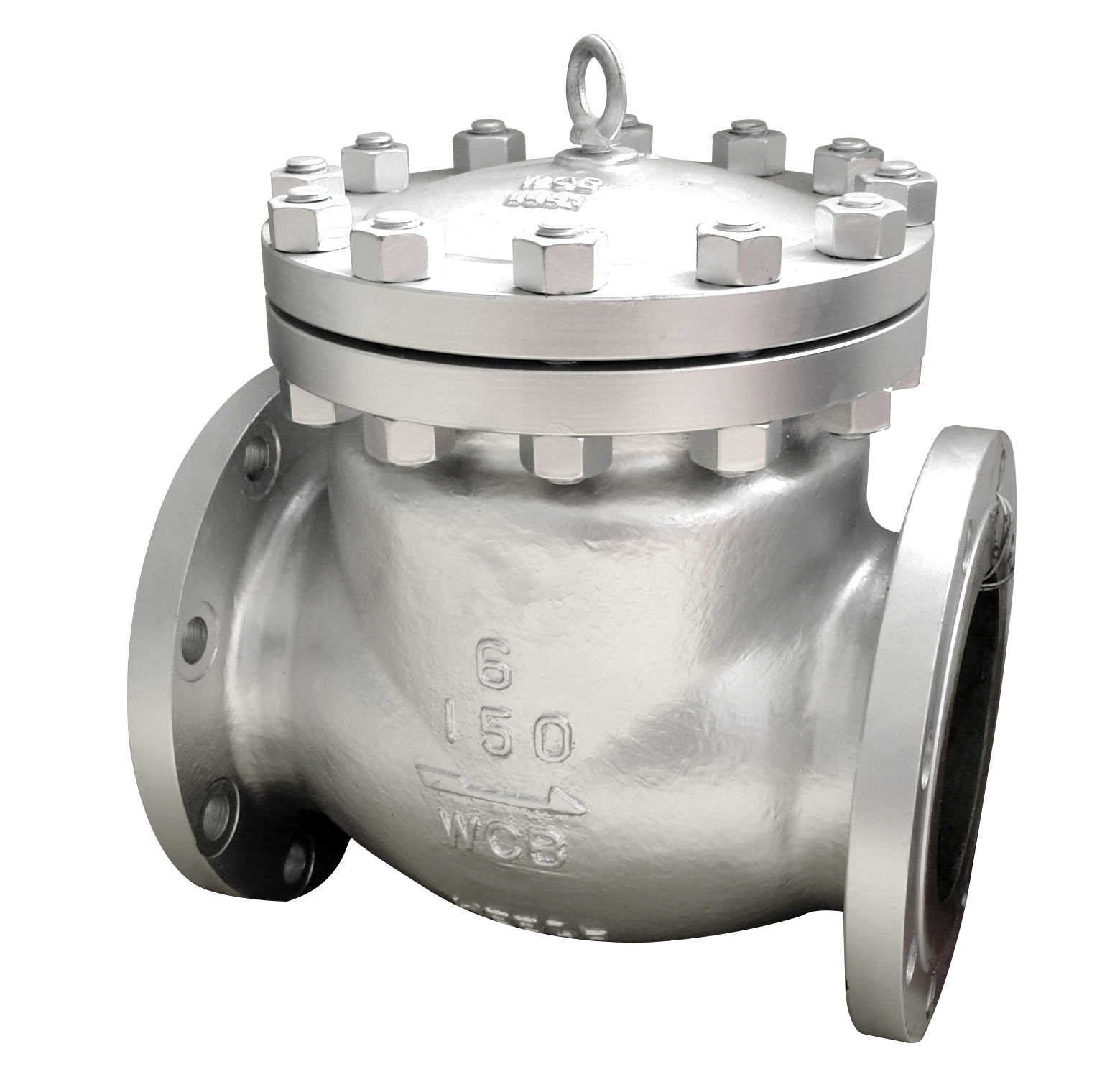


Industrial Gate Valve - API 600, ANSI Class 150 to 2500
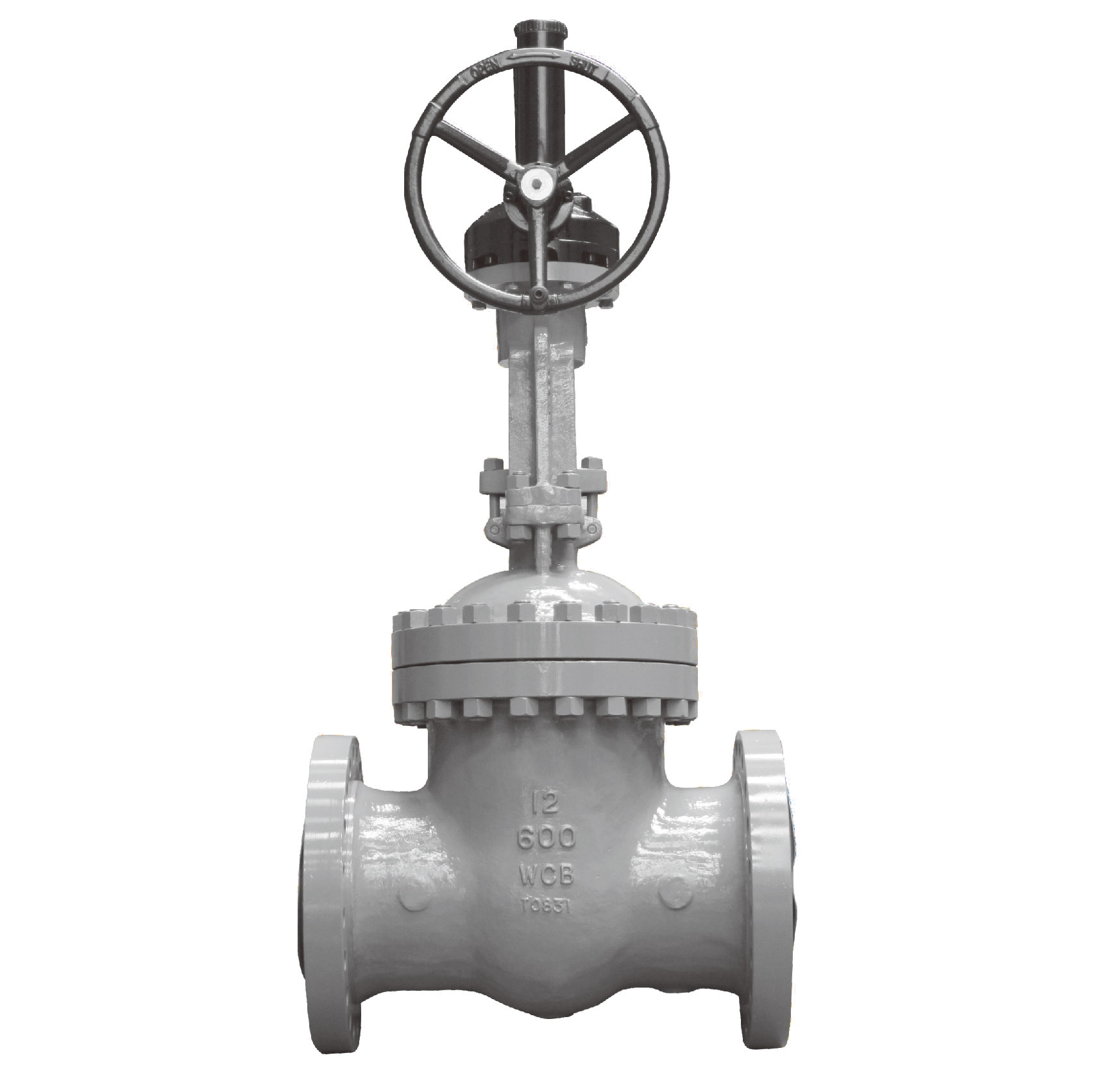
Industrial Gate Valve, also known as sluice valve, opens by lifting a round or rectangular gate/wedge out of the path of the fluid. These valves are generally either fully open or fully closed, used in fluid pipelines to control the flow of fluid. However, the gate valve should not be used in the regulation or throttling of flow. Manufactured to API 600, API 6D, and ANSI B16.34, available in sizes 2″ to 36″ (DN50 to DN900) and pressure ratings from ANSI Class 150Lb to 2500Lb.
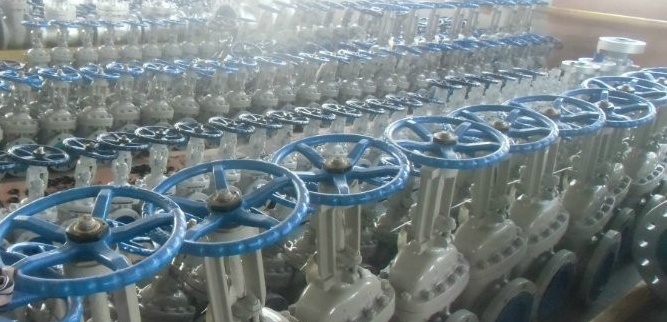
Classification and Configuration of Industrial Gate Valve
• Types of Wedge / Disc: Flexible Wedge, Solid Wedge
• Types of Bonnet: Bolted Bonnet, Welded Bonnet, Pressure Seal Bonnet
• Types of Stem Movement: Rising Stem (OS&Y), Non-Rising Stem (NRS)
• Types of End Connections: Flanged, Butt Weld, Threaded, Socket Weld
• Types of Drive: Handwheel, Bevel Gear, Electric Actuator, Bare Stem Design
• Types of Material: Carbon Steel, Alloy Steel, Stainless Steel, Duplex Stainless Steel, Bronze, Cast Iron, Ductile Iron
✓ Available in multiple configurations to suit different pipeline services and pressure classes
Industrial Gate Valve Applications
• Fire protection systems: fire main lines and sprinkler systems requiring reliable on-off isolation.
• Water distribution pipelines: municipal water supply, distribution networks, and water treatment plants.
• Petroleum industry: crude oil, refined product, and petrochemical process lines.
• Oil and gas industry: transmission, gathering, and distribution pipelines across all pressure classes.
• Power generation: main steam, boiler feedwater, and cooling water systems.
• General industrial pipelines: non-corrosive and mildly corrosive media requiring full bore flow with minimal pressure drop.
Industrial Gate Valve Standards and Parameters
• Design and Manufacture: ANSI B16.34, API 600, API 6D
• Inspection and Test: API 598, API 6D
• End Flange Connection: ANSI B16.5 (for NPS ≤ 24″), API 605 or ASME B16.47A, MSS-SP-44 (for NPS > 24″)
• Butt Welded End: ANSI B16.25
• Face to Face (End to End): ANSI B16.10
• Pressure-Temperature Ratings: ASME B16.34
• Size Range: 2″ to 36″ (DN50 to DN900)
• Pressure Rating: ANSI Class 150LB, 300LB, 600LB, 900LB, 1500LB, 2500LB
• Special Design: NACE MR 0175, Bypass Valve
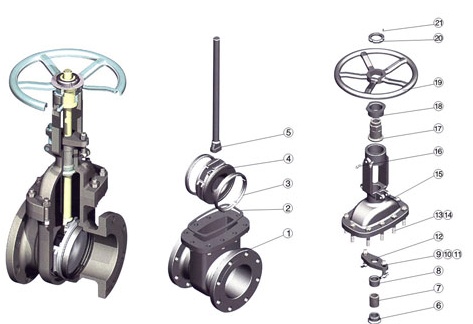
Valve Parts and Materials of Cast Steel Industrial Gate Valve
| Parts No. | Parts Name | Materials | WCB / Trim 1 | WCB / Trim 5 | WCB / Trim 8 | CF8 / 304 | CF8M / 316 |
|---|---|---|---|---|---|---|---|
| 1 | Body | ASTM A216 WCB | ASTM A216 WCB | ASTM A216 WCB | ASTM A216 WCB | ASTM A351 CF8 | ASTM A351 CF8M |
| 2 | Gasket | Soft Iron + Graphite or 304 + Graphite | Soft Iron + Graphite | 304 + Graphite | 316 + Graphite | 304 + Graphite | 316 + Graphite |
| 3 | Seat Ring | A105 + 13Cr | A105 + STL | A105 + STL | A105 + STL | ASTM A351 CF8 | ASTM A351 CF8M |
| 4 | Gate | ASTM A216 WCB + 13Cr | ASTM A216 WCB + STL | ASTM A216 WCB + 13Cr | ASTM A216 WCB + 13Cr | ASTM A351 CF8 | ASTM A351 CF8M |
| 5 | Stem | ASTM A182 F6a | ASTM A182 F6a | ASTM A182 F6a | ASTM A182 F6a | ASTM A182 F304 | ASTM A182 F316 |
| 6 | Backseat Bushing | ASTM A182 F6a | ASTM A182 F6a | ASTM A182 F6a | ASTM A182 F6a | ASTM A351 CF8 | ASTM A351 CF8M |
| 7 | Packing | Graphite | Graphite | Graphite | Graphite | Graphite | Graphite |
| 8 | Gland | ASTM A182 F6a | ASTM A182 F6a | ASTM A182 F6a | ASTM A182 F6a | ASTM A182 F304 | ASTM A182 F316 |
| 9 | Gland Eyebolt | ASTM A193 B7 | ASTM A193 B7 | ASTM A193 B7 | ASTM A193 B7 | ASTM A193 B8 | ASTM A193 B8M |
| 10 | Eyebolt Nut | ASTM A194 2H | ASTM A194 2H | ASTM A194 2H | ASTM A194 2H | ASTM A194 8 | ASTM A194 8M |
| 11 | Eyebolt Pin | ASTM A36 | ASTM A36 | ASTM A36 | ASTM A36 | 304SS | 316SS |
| 12 | Gland Flange | ASTM A216 WCB | ASTM A216 WCB | ASTM A216 WCB | ASTM A216 WCB | ASTM A351 CF8 | ASTM A351 CF8M |
| 13 | Bonnet Bolt | ASTM A193 B7 | ASTM A193 B7 | ASTM A193 B7 | ASTM A193 B7 | ASTM A193 B8 | ASTM A193 B8M |
| 14 | Bonnet Nut | ASTM A194 2H | ASTM A194 2H | ASTM A194 2H | ASTM A194 2H | ASTM A194 8 | ASTM A194 8M |
| 15 | Bonnet | ASTM A216 WCB | ASTM A216 WCB | ASTM A216 WCB | ASTM A216 WCB | ASTM A351 CF8 | ASTM A351 CF8M |
| 16 | Nipple | Carbon Steel | Carbon Steel | Carbon Steel | Carbon Steel | Carbon Steel | Carbon Steel |
| 17 | Stem Nut | ASTM A439 D2 | ASTM A439 D2 | ASTM A439 D2 | ASTM A439 D2 | ASTM A439 D2 | ASTM A439 D2 |
| 18 | Yoke Sleeve Nut | Carbon Steel | Carbon Steel | Carbon Steel | Carbon Steel | Carbon Steel | Carbon Steel |
| 19 | Hand Wheel | Ductile Iron | Ductile Iron | Ductile Iron | Ductile Iron | Ductile Iron | Ductile Iron |
| 20 | Hand Wheel Nut | Carbon Steel | Carbon Steel | Carbon Steel | Carbon Steel | Carbon Steel | Carbon Steel |
| 21 | Set Screw | ASTM A193 B7 | ASTM A193 B7 | ASTM A193 B7 | ASTM A193 B7 | ASTM A193 B7 | ASTM A193 B7 |
Reference: API 600, API 6D, ANSI B16.34. Trim numbers follow API 600 standard. Materials may vary by model and pressure rating. Contact us for confirmed material certificate.
FAQ - Industrial Gate Valve
Q1: What is an industrial gate valve?
A: An industrial gate valve, also known as a sluice valve, is a linear motion valve that opens by lifting a round or rectangular gate/wedge out of the path of the fluid. It is designed for on-off service and provides full bore flow with minimal pressure drop. It is not recommended for throttling or flow regulation.
Q2: What is the difference between a gate valve and a globe valve?
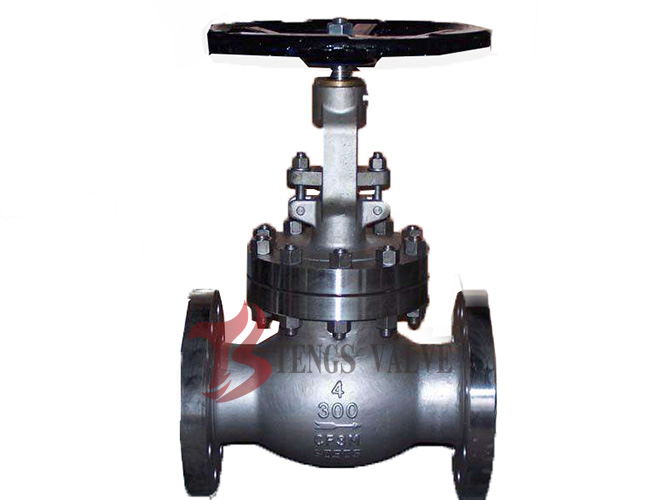
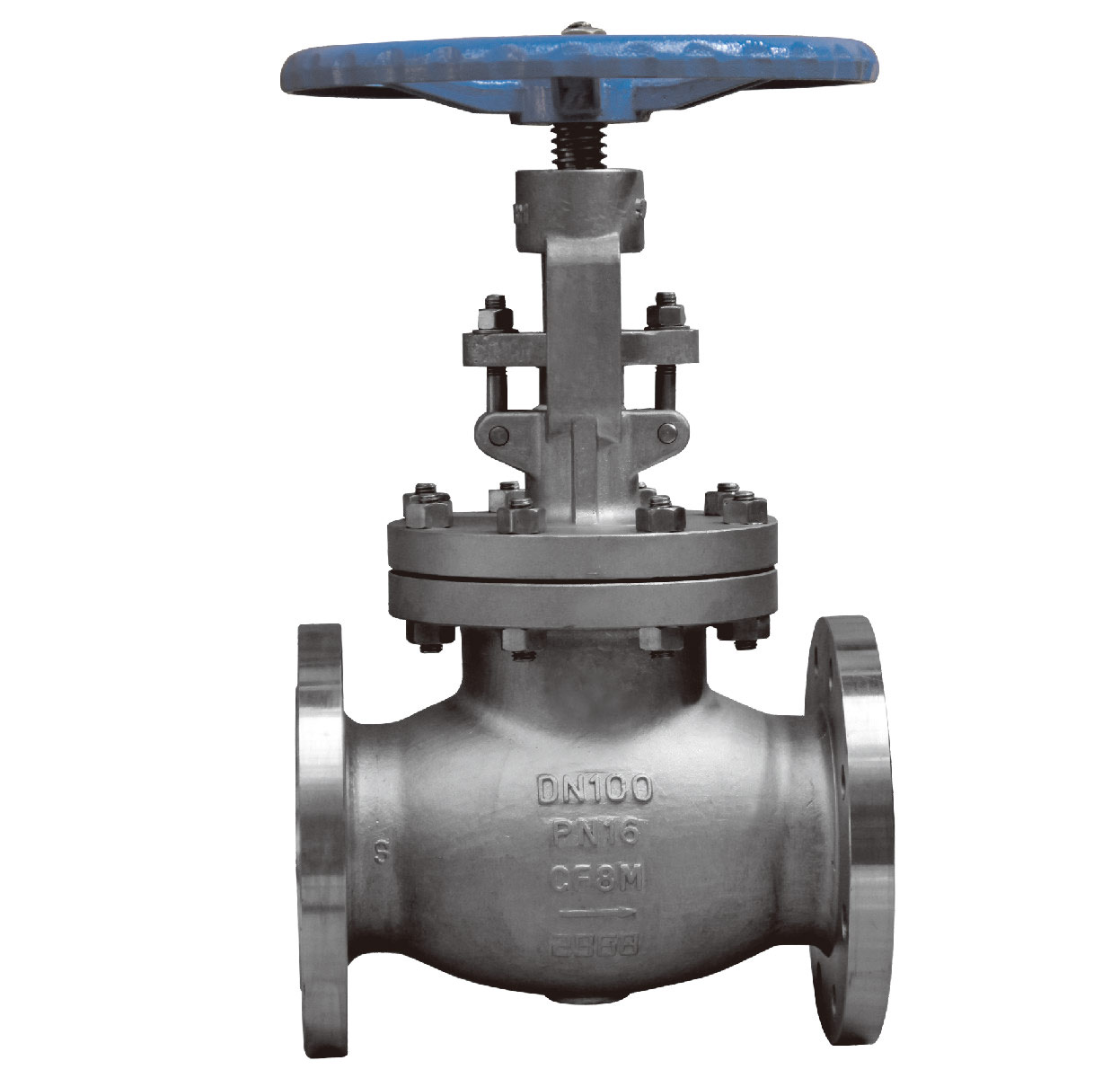
A: A gate valve uses a wedge that moves perpendicular to the flow, providing full bore flow with minimal pressure drop — ideal for on-off service. A globe valve uses a plug that moves along the flow axis, providing better throttling and flow regulation — ideal for modulating service. Gate valves should not be used for throttling.
Q3: What is the difference between OS&Y and NRS gate valves?
A: OS&Y (Outside Screw and Yoke) has a rising stem that visually indicates valve position, and the stem threads are outside the media, making it suitable for corrosive and high temperature service. NRS (Non-Rising Stem) has a non-rising stem, requiring less vertical space — commonly used in buried or space-limited installations.
Q4: What is the difference between bolted bonnet and pressure seal bonnet?
A: Bolted bonnet is suitable for general service up to Class 900 and is easy to maintain. Pressure seal bonnet (PSB) uses internal line pressure to tighten the seal, making it more suitable for very high pressure and high temperature applications (Class 900 and above). Both options are available depending on the pressure class and service conditions.
Q5: What are the common trim materials for API 600 gate valves?
A: Common trim materials include Trim 1# (13Cr), Trim 5# (Stellite), Trim 8# (13Cr + Stellite), Trim 10# (316SS), and Trim 12# (316SS + Stellite). Material selection depends on service conditions such as media, temperature, pressure, and required corrosion resistance.
Q6: What end connections and actuation options are available?
A: End connections include flanged (RF, FF, RTJ), butt weld, threaded, and socket weld. Actuation options include manual handwheel, bevel gear, electric actuator, and bare stem design. Other options are available on request.
Get a Fast Quote for Industrial Gate Valve
Send us your size, pressure rating, material, end connection, actuation type, and quantity. Our team will reply within 24 hours with price, drawing, and delivery time.
Email: sales@tengsvalve.com
Website: Request a Quote Online
Email Us Now
Dimensions of Cast Steel Industrial Gate Valves
Related Valve Pages
• Globe Valve - Cast Steel Globe Valve Series
• Industrial Check Valve - Cast Steel Check Valve Main Page
• Ball Valve - Ball Valve Series Overview
• Butterfly Valve - Butterfly Valve Series Overview
• Forged Gate Valve - Forged Steel Gate Valve Series