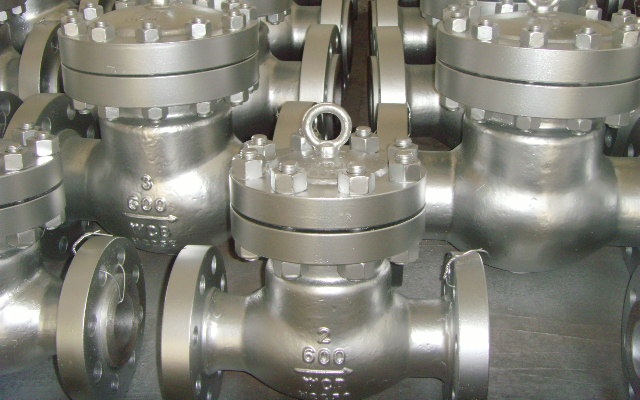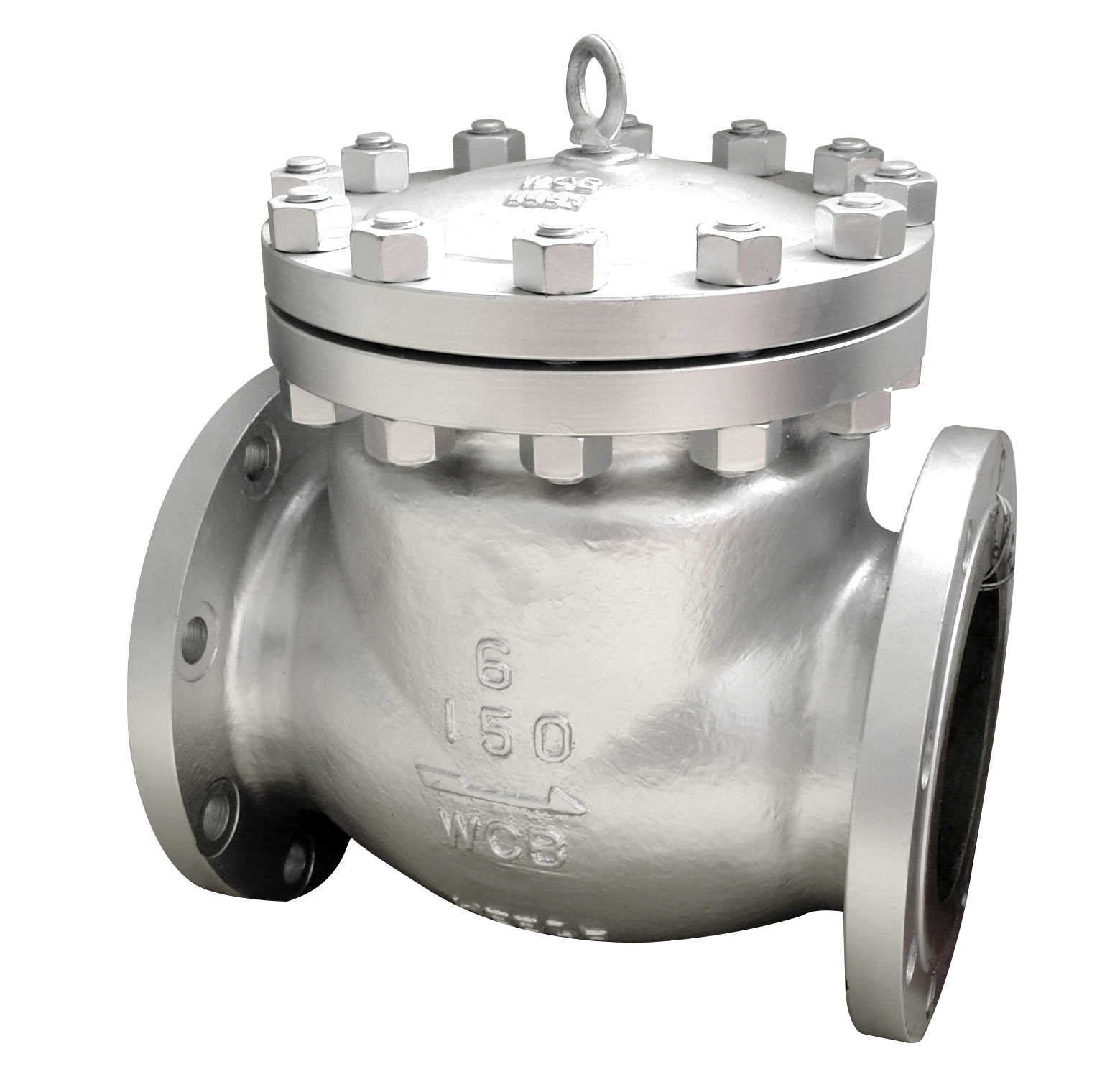


Carbon Steel Swing Check Valve - API 6D, BS 1868, 2" to 36"
Tengs Valve supplies high-quality Carbon Steel Swing Check Valves (Non-Return Valves) in cast steel, manufactured to API 6D, ANSI B16.34, and BS 1868 standards. These swing check valves feature bolted bonnet or pressure seal cover construction with swing type disc. Available in sizes 2″ to 36″ (DN50 to DN900) with pressure ratings from ANSI Class 150LB to 2500LB. End connections include flanged or butt weld. Materials include carbon steel (WCB, LCB, LCC), alloy steel (WC6, WC9, C5, C12), or equivalent. Ideal for oil & gas, chemical, power generation, and water treatment pipeline systems.
Cast Carbon Steel Swing Check Valve Specifications
• Design & Manufacture: API 6D, ANSI B16.34, BS 1868
• Construction: Bolted Bonnet, Swing Type Disc
• Size Range: 2″ to 36″ (DN50 to DN900)
• Pressure Ratings: ANSI 150LB, 300LB, 600LB, 900LB, 1500LB, 2500LB
• End Connections: Flanged, Butt Weld (BW)
• Body Materials: WCB, LCB, LCC, WC6, WC9, C5, C12, or Equivalent
• Trim Materials: Various trim materials available to suit service conditions
• Sour Service: NACE MR 0175 on Request
✓ WCB / LCB / LCC carbon steel grades available for different temperature and service conditions
Carbon Steel Material Grades: WCB vs LCB vs LCC
| Grade | Standard | Temperature Range | Typical Application |
|---|---|---|---|
| WCB | ASTM A216 WCB | -29°C to 425°C | General oil, gas, water, and steam service |
| LCB | ASTM A352 LCB | -46°C to 340°C | Low temperature service, LNG, cold climate pipelines |
| LCC | ASTM A352 LCC | -46°C to 340°C | Low temperature service with higher strength requirement |
Reference: ASTM A216 / A352. LCB and LCC provide guaranteed low-temperature toughness for service below -29°C.
Swing Check Valve Main Parts and Materials
| Part Name | Material | ||
|---|---|---|---|
| Carbon Steel (WCB) | Alloy Steel (WC6 / WC9) | Stainless Steel (CF8 / CF8M) | |
| Body | A216 WCB | A217 WC6 / WC9 | A351 CF8 / CF8M |
| Bonnet / Cover | A216 WCB | A217 WC6 / WC9 | A351 CF8 / CF8M |
| Disc | WCB + 13Cr / STL | WC6 / WC9 + 13Cr / STL | CF8 / CF8M |
| Seat | 13Cr / STL | 13Cr / STL | SS304 / SS316 |
| Hinge Pin | A182 F6a | A182 F6a / F11 | A182 F304 / F316 |
| Bolts / Nuts | A193 B7 / A194 2H | A193 B7 / A194 2H | A193 B8 / A194 8, B8M / 8M |
| Gasket | Graphite / PTFE | Graphite / PTFE | Graphite / PTFE |
Reference: API 6D, BS 1868. Materials may vary by model and pressure rating. Contact us for confirmed material certificate.
Typical Applications of Carbon Steel Swing Check Valve
• Oil & gas transmission: crude oil, natural gas, and refined product pipelines requiring reliable backflow protection.
• Refinery and petrochemical: process lines where reverse flow must be prevented to protect pumps and compressors.
• Power generation: main steam, boiler feedwater, and cooling water systems at all pressure classes.
• Water treatment: pump discharge lines, water distribution, and wastewater systems.
• Low temperature service: LCB / LCC grades for LNG, cold climate, and cryogenic pipeline applications.
• General industrial pipelines: WCB grade for non-corrosive and mildly corrosive media at moderate temperatures.
FAQ - Carbon Steel Swing Check Valve
Q1: What is a carbon steel swing check valve?
A: A carbon steel swing check valve is a non-return valve with a hinged disc that swings on a hinge pin. When forward flow enters, the disc opens; when flow stops or reverses, the disc closes automatically to prevent backflow. The body and bonnet are made of cast carbon steel (WCB, LCB, or LCC), making it suitable for oil, gas, water, and steam service at various pressure classes.
Q2: What is the difference between WCB, LCB, and LCC?
A: WCB is standard carbon steel (ASTM A216) suitable for service from -29°C to 425°C. LCB and LCC are low-temperature carbon steel grades (ASTM A352) with guaranteed impact toughness down to -46°C. LCB is the standard low-temperature grade, while LCC offers higher strength for similar low-temperature applications. LCB and LCC are preferred for LNG, cold climate, and cryogenic pipelines.
Q3: What is the difference between API 6D and BS 1868?
A: API 6D is an American Petroleum Institute standard covering pipeline valves including check valves, with stringent testing requirements. BS 1868 is a British Standard specifically for steel check valves with flanged or butt-welding ends for the petroleum, petrochemical, and allied industries. Both standards are widely accepted in the oil and gas industry, with API 6D more common in American projects and BS 1868 in European and Middle East projects.
Q4: What are the pressure ratings and size range?
A: This carbon steel swing check valve is available in sizes 2″ to 36″ (DN50 to DN900), with pressure ratings from ANSI Class 150LB to 2500LB. Other sizes and pressure ratings are available on request.
Q5: Can swing check valves be installed in vertical pipelines?
A: Yes. Swing check valves can be installed in both horizontal and vertical pipelines. When installed in vertical lines, the flow must be in an upward direction. For horizontal installation, the bonnet should be on top to ensure proper disc movement. Please confirm installation orientation when requesting a quotation.
Q6: What is the difference between a swing check valve and a lift check valve?
A: A swing check valve uses a hinged disc that swings on a hinge pin, providing full bore flow with minimal pressure drop and low flow resistance — suitable for larger sizes and horizontal pipelines. A lift check valve uses a piston or lifting disc that moves along the flow axis, providing faster closing and better sealing at the seat — suitable for smaller sizes and vertical pipelines.
Get a Fast Quote for Carbon Steel Swing Check Valve
Send us your size, pressure rating, material grade (WCB / LCB / LCC / WC6 / WC9), end connection, and quantity. Our team will reply within 24 hours with price, drawing, and delivery time.
Email: sales@tengsvalve.com
Website: Request a Quote Online
Email Us Now
Swing Check Valve Dimension Details
Related Valve Pages
• Industrial Check Valve - Cast Steel Check Valve Main Page
• Industrial Gate Valve - Cast Steel Gate Valve Series
• Globe Valve - Cast Steel Globe Valve Series
• Ball Valve - Ball Valve Series Overview
• Butterfly Valve - Butterfly Valve Series Overview