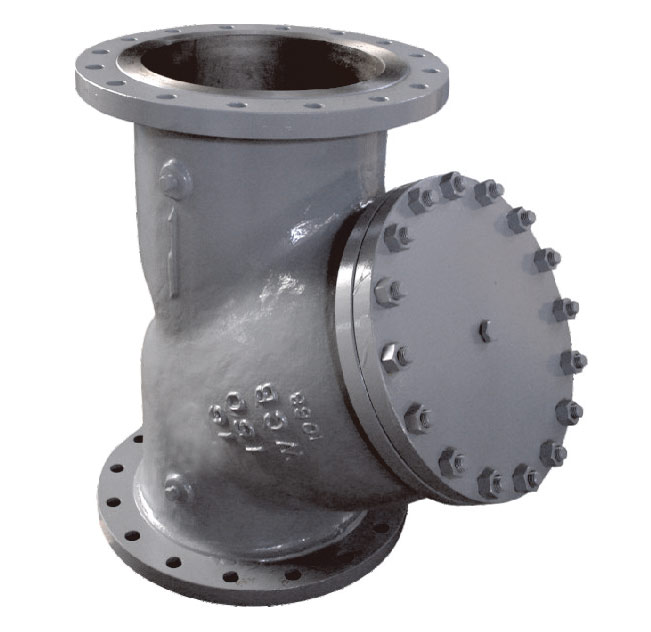
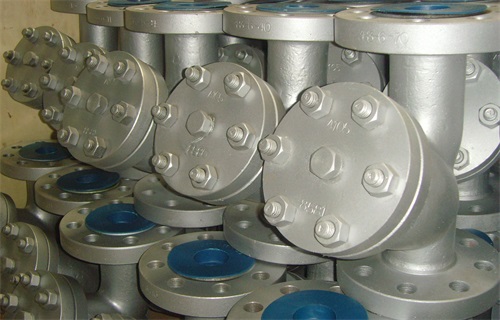
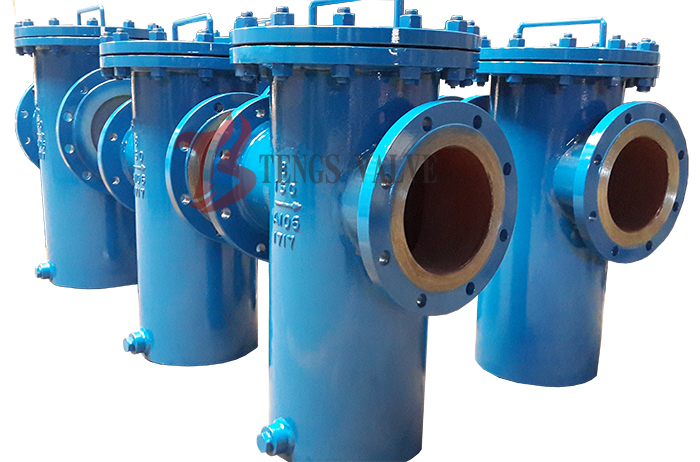
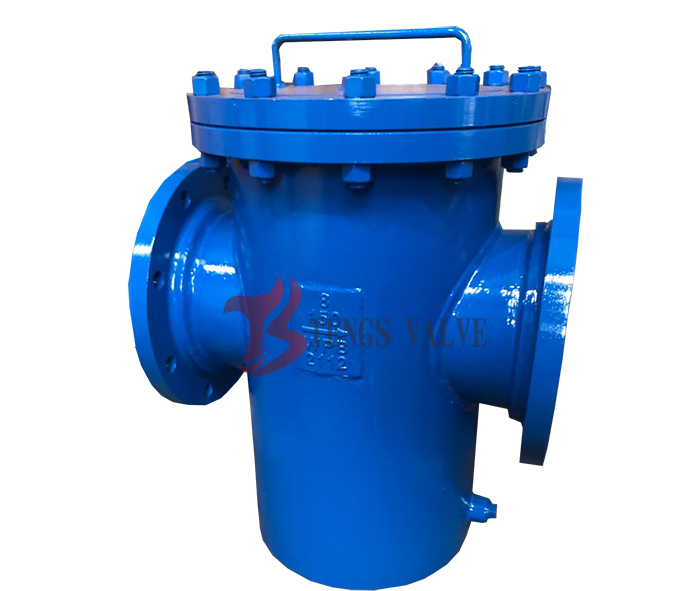
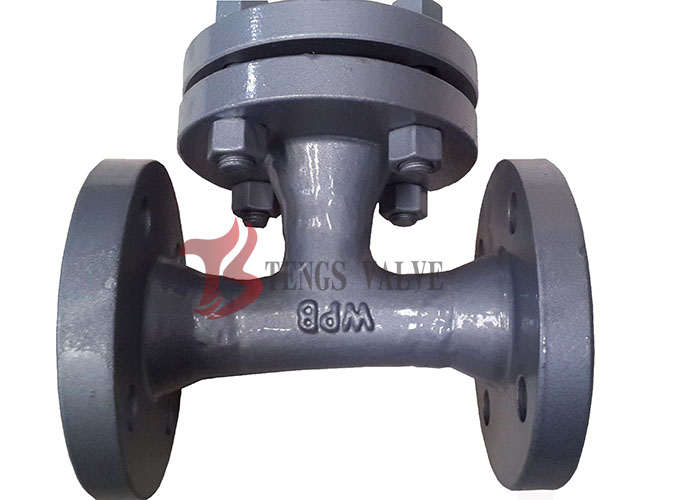
Cast Stainless Steel DIN PN16 Y Type Strainer - A351 CF8 CF8M CF3 CF3M, DN15 to DN600
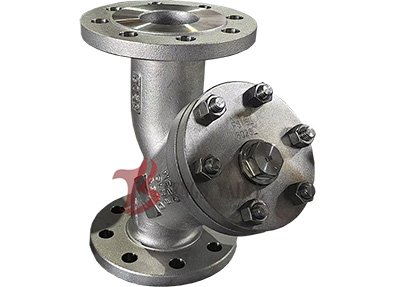
Tengs Valve supplies high-quality Cast Stainless Steel DIN PN16 Y Type Strainers for DIN standard service in pressure rating PN16 or above (PN25 / PN40 available). Body is cast stainless steel A351-CF8, CF8M, CF3 or CF3M, equivalent to EN-GX5CrNi18-10 (1.4308), EN-GX5CrNiMo19-11-2 (1.4408), EN-GX2CrNi19-11 (1.4306) and EN-GX2CrNiMo19-11-2 (1.4404). Manufactured with bolted cover, flanged FF or RF ends to DIN EN 1092-1, and drain plug or drain valve on request. Nominal diameters range from DN15 to DN600. Screens are supplied in stainless steel 304, 316, 316L and DSS, as perforated plate (1mm to 5mm hole) or wire mesh (10-100 mesh). Ideal for corrosive water, chemical, food and pharmaceutical service in European standard piping systems.
Cast Stainless Steel DIN PN16 Y Type Strainer Specification
• Strainer Type: Y Type, Y Pattern
• Sizes: DN15 to DN600
• Pressure Rating: PN16 or above (PN25 / PN40 available)
• Body Material: Cast Stainless Steel A351-CF8, CF8M, CF3, CF3M
• ASTM / EN Equivalent: CF8 = 1.4308, CF8M = 1.4408, CF3 = 1.4306, CF3M = 1.4404
• Strainer Screen: Stainless Steel 304, 316, 316L, DSS etc.
• Perforated Hole Size: 1mm, 2mm, 3mm, 4mm, 5mm etc.
• Wire Mesh: Stainless Steel SS304, SS316
• Mesh Size: 10, 20, 40, 60, 80, 100 mesh etc.
• End Connection: Flanged FF (Flat Face), Flanged RF (Raised Face)
• Cover Type: Bolted Cover, Flanged with Blind Flange
• Drain Connection: Plug, Flange, or Valve
• Design and Manufacture: DIN Standard
• Inspection and Test: DIN 3230, API 598
• Flange Dimension: DIN EN 1092-1 (PN16, PN25, PN40)
• Face to Face: EN 558, ASME B16.10
✓ Cast stainless steel DIN PN16 Y strainer provides corrosion-resistant filtration for chemical, food, pharmaceutical and seawater service
DIN Stainless Steel Y Strainer Pressure Rating: PN16 vs PN25 vs PN40
| Pressure Rating |
Design Pressure (bar) |
Design Pressure (psi) |
Typical Application |
| PN16 |
16 |
232 |
Chemical feed, food and beverage, pharmaceutical, water treatment, corrosive media |
| PN25 |
25 |
362 |
Chemical process, corrosive steam, higher pressure reagent lines |
| PN40 |
40 |
580 |
High-pressure chemical, pharmaceutical, corrosive process piping |
Reference: DIN EN 1092-1. PN16 is the standard rating for stainless steel chemical and food service; PN25 and PN40 are selected for higher pressure corrosive process piping.
A351 Stainless Steel Material Selection: CF8 vs CF8M vs CF3 vs CF3M
| ASTM Grade |
EN Material Number |
EN Designation |
Key Characteristic |
Typical Application |
| A351-CF8 (SS304) |
1.4308 |
EN-GX5CrNi18-10 |
General corrosion resistance |
Water treatment, food and beverage, general chemical |
| A351-CF8M (SS316) |
1.4408 |
EN-GX5CrNiMo19-11-2 |
Mo-bearing, chloride resistance |
Chemical, marine, pharmaceutical, chloride-containing media |
| A351-CF3 (SS304L) |
1.4306 |
EN-GX2CrNi19-11 |
Low-carbon, weld-friendly |
Welded construction, food and pharmaceutical, nitric acid service |
| A351-CF3M (SS316L) |
1.4404 |
EN-GX2CrNiMo19-11-2 |
Low-carbon + Mo-bearing, high corrosion resistance |
Pharmaceutical, chemical, desalination, high-purity corrosive service |
Reference: ASTM A351, EN 10213, EN 10283. CF8M (1.4408) is the most widely used stainless steel grade for DIN PN16 Y strainers; CF3M (1.4404) is selected for pharmaceutical and high-purity service; CF8 and CF3 are the low-cost alternatives for general corrosion and welded construction.
Stainless Steel DIN Y Strainer Screen Selection: Perforated Plate vs Wire Mesh
| Screen Type |
Opening Size |
Material |
Typical Application |
| Perforated Plate |
1mm, 2mm, 3mm, 4mm, 5mm |
SS304, SS316, SS316L, DSS |
Coarse filtration, high dirt load, large debris removal in chemical and food processing |
| Wire Mesh |
10, 20, 40, 60, 80, 100 mesh |
SS304, SS316 |
Fine filtration, pump protection, pharmaceutical and food grade service |
| Combined Screen |
Perforated plate + wire mesh |
SS304, SS316, SS316L |
High dirt load with fine filtration requirement, common in chemical main lines |
Reference: DIN 3230, EN 12266-1. Perforated plate is standard for large diameter and high dirt load service; wire mesh is used where finer filtration is required. Combined screens are commonly specified for chemical and food processing main lines.
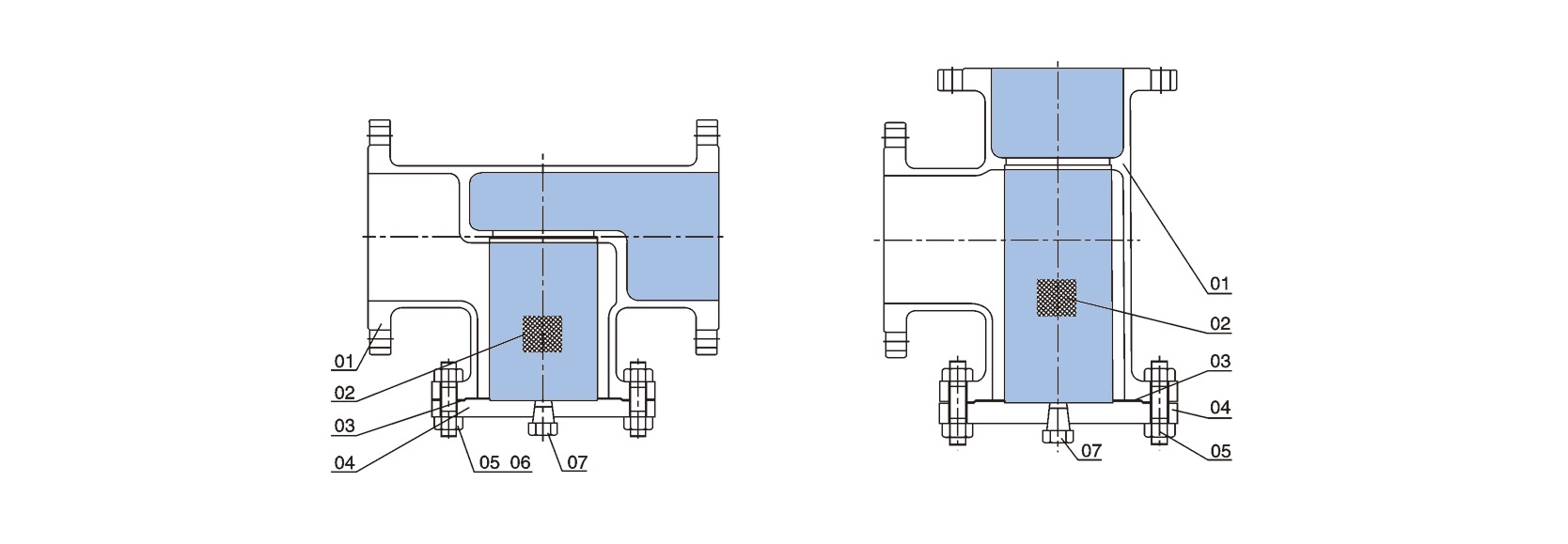
Cast Stainless Steel DIN PN16 Y Strainer Main Parts and Material List
| No. |
Part Name |
Material |
| 01 |
Body |
A351-CF8 (1.4308), A351-CF8M (1.4408), A351-CF3 (1.4306), A351-CF3M (1.4404) |
| 02 |
Screen |
304SS, 316SS, 316LSS, DSS |
| 03 |
Gasket |
PTFE, Graphite + Stainless Steel (304SS, 316SS) |
| 04 |
Cover |
A351-CF8, CF8M, A182-F304, A182-F316, A182-F316L |
| 05 |
Bolt |
A193 B8, A193 B8M |
| 06 |
Nut |
A194 8, A194 8M |
| 07 |
Drain Plug / Drain Valve |
A182-F304, A182-F316, A182-F316L |
Reference: DIN 3230, API 598, EN 10213. Materials may vary by model and pressure rating. Contact us for confirmed material certificate to EN 10204 3.1.
Cast Stainless Steel DIN PN16 Y Type Strainer Applications
• Chemical and petrochemical: reagent feed lines, corrosive media filtration with CF8M or CF3M body for European process plants.
• Food and beverage: stainless steel hygienic service, sugar, brewing and dairy processing with CF3 or CF3M body.
• Pharmaceutical: high-purity reagent and solvent filtration with CF3M (1.4404) body and SS316L screen.
• Water treatment and desalination: seawater and brackish water service with CF8M body and DSS screen.
• Marine and offshore: seawater cooling and offshore process service requiring chloride resistance.
• District heating and HVAC: stainless steel pipework in European district energy and building services requiring DIN EN 1092-1 flanged ends.
FAQ - Cast Stainless Steel DIN PN16 Y Type Strainer
Q1: Why choose cast stainless steel CF8M instead of carbon steel A216-WCB?
A: A216-WCB carbon steel is cost-effective for non-corrosive water, steam and oil service, but it corrodes in the presence of chlorides, acids and aggressive chemicals. Cast stainless steel CF8M (SS316, EN 1.4408) contains molybdenum which provides excellent resistance to chloride pitting and general corrosion, making it suitable for chemical, marine, pharmaceutical and seawater service. For high-purity or welded applications, low-carbon CF3M (SS316L, EN 1.4404) is preferred to prevent intergranular corrosion after welding.
Q2: What is the difference between CF8, CF8M, CF3 and CF3M?
A: CF8 (SS304, EN 1.4308) is the basic stainless steel with general corrosion resistance. CF8M (SS316, EN 1.4408) adds molybdenum for better chloride resistance. CF3 (SS304L, EN 1.4306) is the low-carbon version of CF8, offering better weldability and resistance to intergranular corrosion. CF3M (SS316L, EN 1.4404) is the low-carbon version of CF8M, combining molybdenum with low carbon for the best corrosion resistance and weldability. For DIN PN16 Y strainers, CF8M is the standard choice; CF3M is specified for pharmaceutical and high-purity service; CF8 and CF3 are economical alternatives for general corrosion service and welded construction.
Q3: What is the difference between perforated plate and wire mesh screens for stainless steel Y strainers?
A: Perforated plate screens are made from a stainless steel plate with punched holes of 1mm to 5mm, providing high mechanical strength and high dirt holding capacity. They are used for coarse filtration and large debris removal in chemical, food and large diameter pipelines. Wire mesh screens are woven from SS304 or SS316 wire with 10 to 100 mesh openings, providing finer filtration for pump and instrument protection. Combined screens (perforated plate + wire mesh) are often specified for chemical main lines where both high dirt load and fine filtration are required.
Q4: Is DIN PN16 equivalent to ANSI 150 for stainless steel Y strainers?
A: DIN PN16 (16 bar / 232 psi) and ANSI Class 150 (19.6 bar / 285 psi) are widely regarded as comparable pressure ratings for stainless steel Y strainers, but they are not identical. PN16 has a slightly lower design pressure, and flange dimensions and bolt pattern differ: PN16 follows DIN EN 1092-1, while Class 150 follows ASME B16.5. For European standard piping systems, PN16 is the standard choice; for ASME standard systems, Class 150 is used. Please specify the standard when requesting a quotation.
Q5: What is the size range and end connection available?
A: Cast stainless steel DIN PN16 Y strainers are available from DN15 to DN600. End connections include Flanged FF (Flat Face) and Flanged RF (Raised Face) to DIN EN 1092-1. Face-to-face dimension follows EN 558 and ASME B16.10. Drain connection is available as drain plug, drain flange or drain valve. For sizes above DN600, a special fabricated design may be evaluated; please contact us with your specific requirement.
Q6: How do I maintain a cast stainless steel DIN PN16 Y strainer?
A: Cast stainless steel DIN Y strainer maintenance is simple: isolate the strainer, depressurize, remove the cover bolts (bolted cover design), take out the screen, clean or replace it, install a new gasket (PTFE or graphite), and reassemble. The Y-shaped body allows screen removal without disconnecting the pipeline. For continuous chemical or pharmaceutical operation, a bypass line or dual-strainer configuration is recommended. Screen replacement is recommended when the pressure drop exceeds the initial clean-screen value by 0.5-1.0 bar.
Request a Quote for Cast Stainless Steel DIN PN16 Y Type Strainer
Send us your DN size, pressure rating (PN16 / PN25 / PN40), body material (CF8 / CF8M / CF3 / CF3M), end connection (FF / RF), screen type (perforated plate or wire mesh), mesh size, drain connection type, and quantity. Our team will reply within 24 hours with price, drawing, and delivery time.
Email Us Now
Y Strainer Dimension Details
Related Strainer Pages
•
Y Strainer - Y Strainer (Wye Strainer) Main Page